Buy rätsel.eu ?
We are moving the project
rätsel.eu .
Are you interested in purchasing the domain
rätsel.eu ?
domain@kv-gmbh.de · 0541-91531010
Buy rätsel.eu ?
Are the graphs identical?
No, the graphs are not identical. While they may have similar shapes and patterns, there are differences in the specific data points and values represented on each graph. These differences could be due to variations in the data, different scales or axes used, or other factors that affect the visualization of the information. Therefore, it is important to carefully compare the details of each graph to understand the differences between them. **
How to interpret mathematical graphs?
Mathematical graphs can be interpreted by analyzing the shape, slope, and intersection points of the lines or curves. The x-axis represents one variable, while the y-axis represents another variable. The point where the graph intersects the axes can provide important information, such as the intercepts. Additionally, the overall trend of the graph can indicate relationships between the variables, such as positive or negative correlations. **

Similar search terms for Graphs
Top-Angebote
Products related to Graphs:
-
Inspire Picks Childrens Puzzle Rope Challenge Board Game Interactive Logic Thinking Game For Kids 1pcTurn playtime into a brainboosting adventure with this engaging kids logic puzzle game designed to challenge and inspire young minds. This interactive rope board game encourages problemsolving, critical thinking, and creativity in a fun, handson...34,93 $*Shipping: 0,00 $Secure redirect to the provider
-
Uplifted Finds Cognitive Challenge Interactive Puzzle Station Cognitive Challenge Interactive Puzzle StationTransform mealtime into a stimulating mental workout with the CognitiveChallenge Puzzle Station, a highutility enrichment module engineered with progressivedifficulty logic. This professionalgrade feeder features a multichambered architecture that...119,97 $*Shipping: 0,00 $Secure redirect to the provider
-
Profile Books Murdle Puzzle Series 3 Books Collection Set by G. T. Karber - Paperback Murder Mystery Logic Puzzle Books - Bestselling Gift for Puzzle FansSharpen your deductive instincts with the Murdle Puzzle Series 3 Books Collection Set, a collection of three bestselling paperback volumes by G. T. Karber. Each book casts you as the brilliant Deductive Logico, tasking you with solving witty, cleverly illustrated murder mystery logic puzzles. This set is perfect for fans of classic whodunits and brain training, and is a great addition to any puzzle enthusiast's library. The Murdle Puzzle Series has become a global phenomenon, and this three-book set collects the complete original trilogy in one paperback bundle. The first book, Murdle, introduces readers to Deductive Logico and a rogues' gallery of suspects, while the second and third books, Murdle: More Killer Puzzles and Murdle: Even More Killer Puzzles, offer increasingly challenging puzzles to solve. Published by Profile Books, this collection is suitable for adult and teenage puzzle enthusiasts aged 12 and above.29,99 £*Shipping: 2,99 £Secure redirect to the provider
-
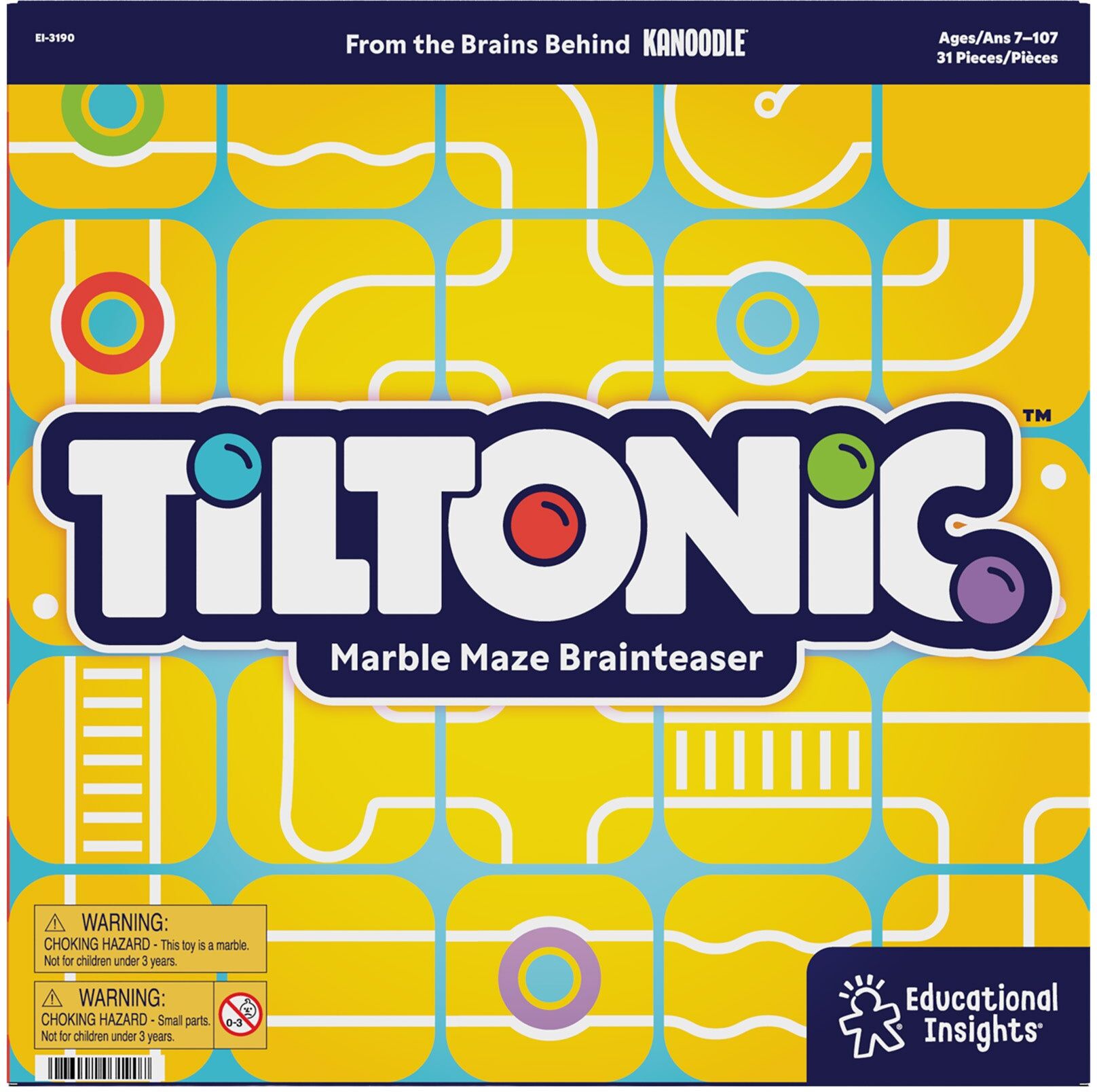
Educational Insights Tiltonic Marble Maze Brainteaser - 7+ - Adjustable Track PuzzleChallenge your problem-solving skills with the Educational Insights Tiltonic Marble Maze Brainteaser. This two-stage puzzle combines maze-building with hands-on marble play, creating a fun challenge for children aged 7 and up. Start by studying one of the included challenge puzzles and arranging the adjustable track pieces on the turquoise game board to create the correct route. Once the maze is ready, tilt the board carefully to guide the four colorful marbles through the track and into their matching destinations. Each challenge encourages players to think ahead, test ideas, and refine their solution. With 50 puzzle challenges, 25 adjustable track pieces, and four marbles, Tiltonic offers plenty of replay value. Children can also design their own marble mazes once they have mastered the included puzzles. The tactile format makes it an engaging alternative to screen-based entertainment while encouraging creativity, logic, critical thinking, and hand-eye coordination.13,59 £*Shipping: 3,95 £Secure redirect to the provider


-
'How do you draw graphs?'
To draw a graph, start by determining the x and y axes and labeling them with the appropriate variables. Then, plot the points by locating the x and y coordinates on the graph and marking them with a point. Connect the points with a line or curve to represent the relationship between the variables. Finally, label the graph with a title, axis labels, and any other necessary information to make it clear and understandable. **
-
How do you read graphs?
When reading graphs, it is important to first identify the axes and the variables being represented. Next, look at the scale of the axes to understand the range of values being shown. Pay attention to the trend or pattern in the data points, such as whether they are increasing, decreasing, or staying constant. Finally, analyze any labels, titles, or legends to fully interpret the information being presented in the graph. **
-
What are self-complementary graphs?
Self-complementary graphs are graphs that are isomorphic to their own complement. In other words, if you take a graph and replace each edge with a non-edge and each non-edge with an edge, you will get the same graph. Self-complementary graphs have a number of interesting properties and are often used in graph theory to study symmetrical structures and relationships between vertices and edges. Examples of self-complementary graphs include the Petersen graph and the Paley graph. **
-
How can one modify graphs?
One can modify graphs by changing the scale of the axes, adding or removing data points, adjusting the appearance of the lines or bars, and adding labels or annotations to provide more context. Additionally, one can change the type of graph used to better represent the data, such as switching from a bar graph to a line graph. Modifying graphs allows for better visualization and understanding of the data being presented. **

How can I draw graphs?
You can draw graphs using various software and tools such as Microsoft Excel, Google Sheets, or graphing calculators. These tools allow you to input data and create different types of graphs such as line graphs, bar graphs, pie charts, and scatter plots. Additionally, you can also use programming languages like Python and R to create more customized and complex graphs. These tools provide a user-friendly interface and various options to customize the appearance and layout of the graphs. **
What are graphs in mathematics?
In mathematics, a graph is a collection of points, called vertices, and lines or curves, called edges, that connect pairs of vertices. Graphs are used to represent relationships between objects or entities. They are often used to model real-world situations, such as social networks, transportation networks, and communication networks. Graph theory is a branch of mathematics that studies the properties and applications of graphs. **
Top-Angebote
Products related to Graphs:
-
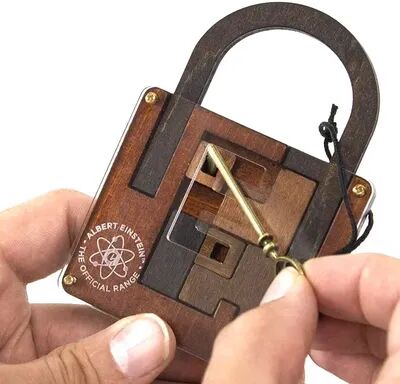
Multisell Products Hub Perfect IQ Lock Challenge Puzzle, Classic Wooden Brainteaser, Cognitive Development Toy For Children Perfect IQ Lock Challenge Puzzle, Classic Wooden Brainteaser, Cognitive Development Toy For ChildrenEngage Your Child's Mind with a Challenging Puzzle Unleash your child's potential with this challenging classic wooden brainteaser puzzle game. Designed to enhance cognitive development, this IQ lock challenge helps improve critical thinking and...49,97 $*Shipping: 0,00 $Secure redirect to the provider
-
Useful Little Things Color Rope Puzzle Board Game Logic Thinking Challenge For Kids blackUntangle, Match, and Solve the Challenge Encourage critical thinking and problem solving skills with this Color Rope Puzzle Board Game. Designed to challenge young minds, this interactive game requires players to untangle, connect, and arrange...29,97 $*Shipping: 0,00 $Secure redirect to the provider
-
Inspire Picks Childrens Puzzle Rope Challenge Board Game Interactive Logic Thinking Game For Kids 1pcTurn playtime into a brainboosting adventure with this engaging kids logic puzzle game designed to challenge and inspire young minds. This interactive rope board game encourages problemsolving, critical thinking, and creativity in a fun, handson...34,93 $*Shipping: 0,00 $Secure redirect to the provider
-
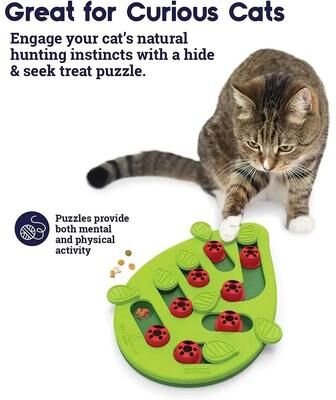
Uplifted Finds Cognitive Challenge Interactive Puzzle Station Cognitive Challenge Interactive Puzzle StationTransform mealtime into a stimulating mental workout with the CognitiveChallenge Puzzle Station, a highutility enrichment module engineered with progressivedifficulty logic. This professionalgrade feeder features a multichambered architecture that...119,97 $*Shipping: 0,00 $Secure redirect to the provider
-
Are the graphs identical?
No, the graphs are not identical. While they may have similar shapes and patterns, there are differences in the specific data points and values represented on each graph. These differences could be due to variations in the data, different scales or axes used, or other factors that affect the visualization of the information. Therefore, it is important to carefully compare the details of each graph to understand the differences between them. **
-
How to interpret mathematical graphs?
Mathematical graphs can be interpreted by analyzing the shape, slope, and intersection points of the lines or curves. The x-axis represents one variable, while the y-axis represents another variable. The point where the graph intersects the axes can provide important information, such as the intercepts. Additionally, the overall trend of the graph can indicate relationships between the variables, such as positive or negative correlations. **
-
'How do you draw graphs?'
To draw a graph, start by determining the x and y axes and labeling them with the appropriate variables. Then, plot the points by locating the x and y coordinates on the graph and marking them with a point. Connect the points with a line or curve to represent the relationship between the variables. Finally, label the graph with a title, axis labels, and any other necessary information to make it clear and understandable. **
-
How do you read graphs?
When reading graphs, it is important to first identify the axes and the variables being represented. Next, look at the scale of the axes to understand the range of values being shown. Pay attention to the trend or pattern in the data points, such as whether they are increasing, decreasing, or staying constant. Finally, analyze any labels, titles, or legends to fully interpret the information being presented in the graph. **
Similar search terms for Graphs
-
Profile Books Murdle Puzzle Series 3 Books Collection Set by G. T. Karber - Paperback Murder Mystery Logic Puzzle Books - Bestselling Gift for Puzzle FansSharpen your deductive instincts with the Murdle Puzzle Series 3 Books Collection Set, a collection of three bestselling paperback volumes by G. T. Karber. Each book casts you as the brilliant Deductive Logico, tasking you with solving witty, cleverly illustrated murder mystery logic puzzles. This set is perfect for fans of classic whodunits and brain training, and is a great addition to any puzzle enthusiast's library. The Murdle Puzzle Series has become a global phenomenon, and this three-book set collects the complete original trilogy in one paperback bundle. The first book, Murdle, introduces readers to Deductive Logico and a rogues' gallery of suspects, while the second and third books, Murdle: More Killer Puzzles and Murdle: Even More Killer Puzzles, offer increasingly challenging puzzles to solve. Published by Profile Books, this collection is suitable for adult and teenage puzzle enthusiasts aged 12 and above.29,99 £*Shipping: 2,99 £Secure redirect to the provider
-
Educational Insights Tiltonic Marble Maze Brainteaser - 7+ - Adjustable Track PuzzleChallenge your problem-solving skills with the Educational Insights Tiltonic Marble Maze Brainteaser. This two-stage puzzle combines maze-building with hands-on marble play, creating a fun challenge for children aged 7 and up. Start by studying one of the included challenge puzzles and arranging the adjustable track pieces on the turquoise game board to create the correct route. Once the maze is ready, tilt the board carefully to guide the four colorful marbles through the track and into their matching destinations. Each challenge encourages players to think ahead, test ideas, and refine their solution. With 50 puzzle challenges, 25 adjustable track pieces, and four marbles, Tiltonic offers plenty of replay value. Children can also design their own marble mazes once they have mastered the included puzzles. The tactile format makes it an engaging alternative to screen-based entertainment while encouraging creativity, logic, critical thinking, and hand-eye coordination.13,59 £*Shipping: 3,95 £Secure redirect to the provider
-
Inspired Living Wooden IQ Lock Puzzle High Difficulty Brainteaser For Focus And Problem Solving Wooden IQ Lock Puzzle High Difficulty Brainteaser For Focus And Problem SolvingChallenge your mind with a wooden IQ lock puzzle designed for handson problemsolving and screenfree play. Its very high difficulty rewards patience and strategic thinking as you work toward fitting the pieces correctly. The wooden construction...23,97 $*Shipping: 0,00 $Secure redirect to the provider
-
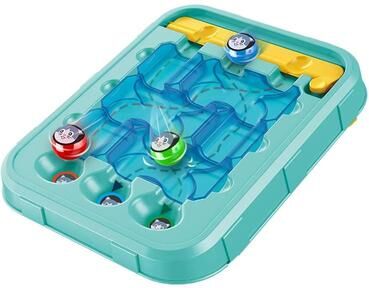
Inspired Finds Kids Ball Maze Logic Puzzle Toy Kids Ball Maze Logic Puzzle ToyTurn quiet afternoons into brainteasing, fun learning sessions with this Kids Ball Maze Logic Puzzle Toy a compact, handson game that challenges childrens thinking, planning, and finemotor skills. Ideal for curious young minds, this ball maze toy...39,99 $*Shipping: 0,00 $Secure redirect to the provider
-
What are self-complementary graphs?
Self-complementary graphs are graphs that are isomorphic to their own complement. In other words, if you take a graph and replace each edge with a non-edge and each non-edge with an edge, you will get the same graph. Self-complementary graphs have a number of interesting properties and are often used in graph theory to study symmetrical structures and relationships between vertices and edges. Examples of self-complementary graphs include the Petersen graph and the Paley graph. **
-
How can one modify graphs?
One can modify graphs by changing the scale of the axes, adding or removing data points, adjusting the appearance of the lines or bars, and adding labels or annotations to provide more context. Additionally, one can change the type of graph used to better represent the data, such as switching from a bar graph to a line graph. Modifying graphs allows for better visualization and understanding of the data being presented. **
-
How can I draw graphs?
You can draw graphs using various software and tools such as Microsoft Excel, Google Sheets, or graphing calculators. These tools allow you to input data and create different types of graphs such as line graphs, bar graphs, pie charts, and scatter plots. Additionally, you can also use programming languages like Python and R to create more customized and complex graphs. These tools provide a user-friendly interface and various options to customize the appearance and layout of the graphs. **
-
What are graphs in mathematics?
In mathematics, a graph is a collection of points, called vertices, and lines or curves, called edges, that connect pairs of vertices. Graphs are used to represent relationships between objects or entities. They are often used to model real-world situations, such as social networks, transportation networks, and communication networks. Graph theory is a branch of mathematics that studies the properties and applications of graphs. **
* All prices are inclusive of VAT and, if applicable, plus shipping costs. The offer information is based on the details provided by the respective shop and is updated through automated processes. Real-time updates do not occur, so deviations can occur in individual cases. ** Note: Parts of this content were created by AI.