Buy rätsel.eu ?
We are moving the project
rätsel.eu .
Are you interested in purchasing the domain
rätsel.eu ?
domain@kv-gmbh.de · 0541-91531010
Buy rätsel.eu ?
How do you calculate the braking distance, the braking process, and the braking deceleration?
The braking distance can be calculated using the formula: braking distance = (initial velocity^2) / (2 * deceleration), where the deceleration is the rate at which the vehicle slows down. The braking process involves the driver applying the brakes, which causes friction between the brake pads and the wheels, leading to a decrease in the vehicle's speed. The braking deceleration can be calculated by dividing the change in velocity by the time it takes for the vehicle to come to a complete stop. **
How do you calculate the braking time and braking distance?
Braking time and braking distance can be calculated using the formula: Braking distance = (initial velocity^2) / (2 * deceleration) Where initial velocity is the speed of the vehicle before braking, and deceleration is the rate at which the vehicle slows down. Braking time can be calculated by dividing the braking distance by the initial velocity. These calculations are based on the assumption of constant deceleration, and may vary depending on factors such as road conditions and the vehicle's braking system. **

Similar search terms for Braking
Top-Angebote
Products related to Braking:
-
Inspire Picks Childrens Puzzle Rope Challenge Board Game Interactive Logic Thinking Game For Kids 1pcTurn playtime into a brainboosting adventure with this engaging kids logic puzzle game designed to challenge and inspire young minds. This interactive rope board game encourages problemsolving, critical thinking, and creativity in a fun, handson...34,93 $*Shipping: 0,00 $Secure redirect to the provider
-
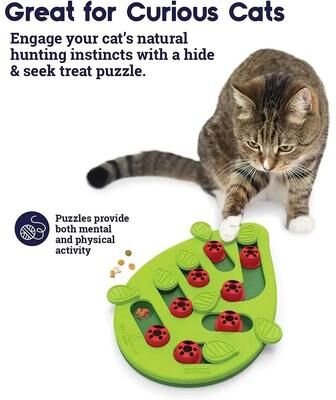
Uplifted Finds Cognitive Challenge Interactive Puzzle Station Cognitive Challenge Interactive Puzzle StationTransform mealtime into a stimulating mental workout with the CognitiveChallenge Puzzle Station, a highutility enrichment module engineered with progressivedifficulty logic. This professionalgrade feeder features a multichambered architecture that...119,97 $*Shipping: 0,00 $Secure redirect to the provider
-
Profile Books Murdle Puzzle Series 3 Books Collection Set by G. T. Karber - Paperback Murder Mystery Logic Puzzle Books - Bestselling Gift for Puzzle FansSharpen your deductive instincts with the Murdle Puzzle Series 3 Books Collection Set, a collection of three bestselling paperback volumes by G. T. Karber. Each book casts you as the brilliant Deductive Logico, tasking you with solving witty, cleverly illustrated murder mystery logic puzzles. This set is perfect for fans of classic whodunits and brain training, and is a great addition to any puzzle enthusiast's library. The Murdle Puzzle Series has become a global phenomenon, and this three-book set collects the complete original trilogy in one paperback bundle. The first book, Murdle, introduces readers to Deductive Logico and a rogues' gallery of suspects, while the second and third books, Murdle: More Killer Puzzles and Murdle: Even More Killer Puzzles, offer increasingly challenging puzzles to solve. Published by Profile Books, this collection is suitable for adult and teenage puzzle enthusiasts aged 12 and above.29,99 £*Shipping: 2,99 £Secure redirect to the provider
-
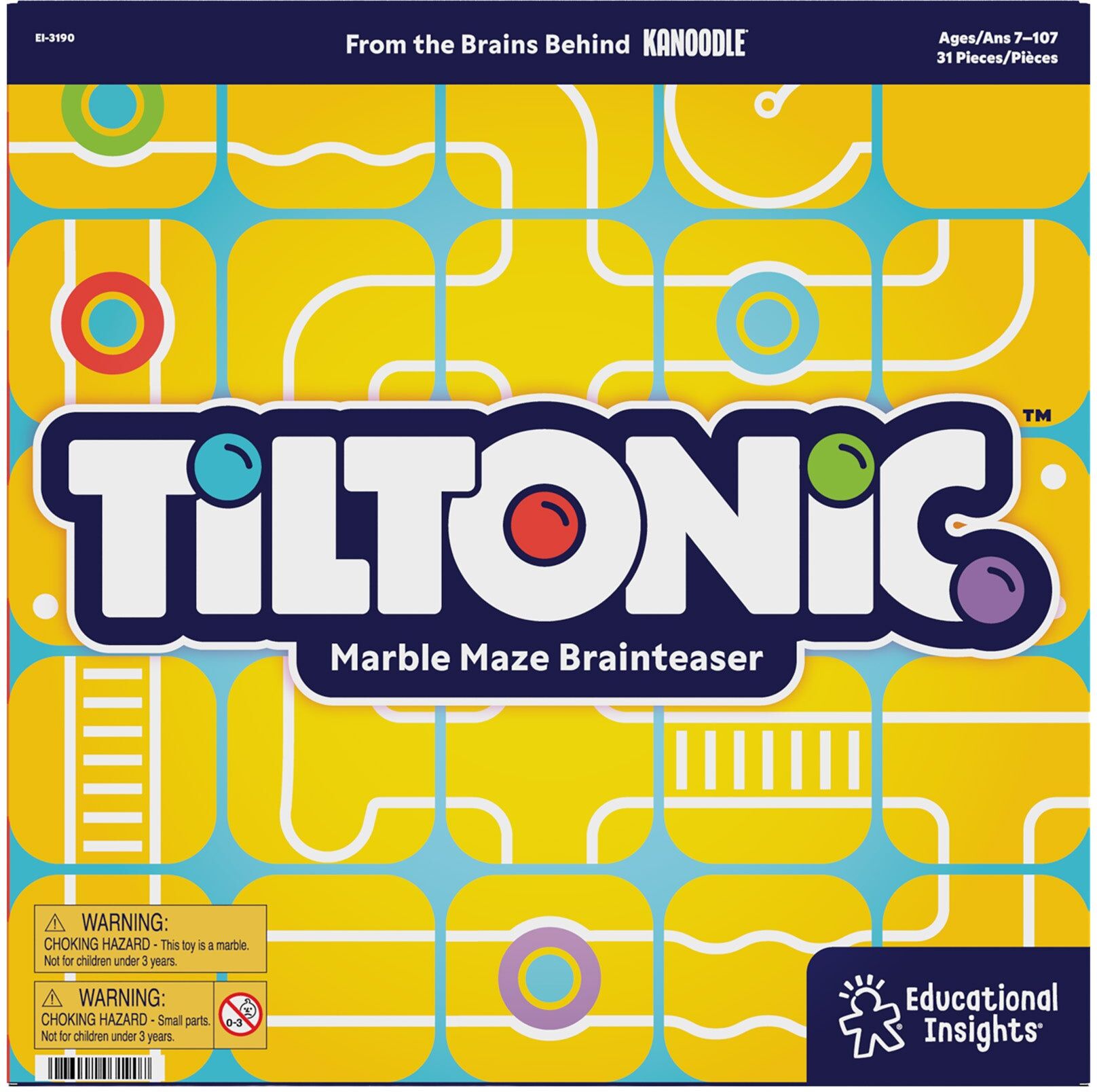
Educational Insights Tiltonic Marble Maze Brainteaser - 7+ - Adjustable Track PuzzleChallenge your problem-solving skills with the Educational Insights Tiltonic Marble Maze Brainteaser. This two-stage puzzle combines maze-building with hands-on marble play, creating a fun challenge for children aged 7 and up. Start by studying one of the included challenge puzzles and arranging the adjustable track pieces on the turquoise game board to create the correct route. Once the maze is ready, tilt the board carefully to guide the four colorful marbles through the track and into their matching destinations. Each challenge encourages players to think ahead, test ideas, and refine their solution. With 50 puzzle challenges, 25 adjustable track pieces, and four marbles, Tiltonic offers plenty of replay value. Children can also design their own marble mazes once they have mastered the included puzzles. The tactile format makes it an engaging alternative to screen-based entertainment while encouraging creativity, logic, critical thinking, and hand-eye coordination.13,89 £*Shipping: 3,95 £Secure redirect to the provider


-
What are the differences between braking to walking speed and braking?
Braking to walking speed typically involves gradually reducing speed until coming to a complete stop, whereas braking refers to the act of slowing down a moving vehicle. When braking to walking speed, the goal is to smoothly decelerate without any sudden stops, while braking may involve more forceful actions to slow down quickly. Additionally, braking to walking speed is often used in situations where a vehicle needs to stop at a precise location, such as at a crosswalk or intersection. **
-
How do you calculate braking time and braking distance in physics?
In physics, braking time and braking distance can be calculated using the equations of motion and the principles of kinematics. The braking time can be calculated using the equation t = v/u, where t is the braking time, v is the final velocity, and u is the initial velocity. The braking distance can be calculated using the equation d = (v^2 - u^2) / (2a), where d is the braking distance and a is the deceleration. These equations take into account the initial and final velocities, as well as the deceleration of the object to determine the braking time and distance. **
-
Is braking a reflex?
Braking can be considered a reflex in certain situations. When a driver reacts to a sudden obstacle or hazard on the road by immediately pressing the brake pedal, it can be seen as a reflexive action. This is because the response is automatic and occurs without conscious thought. However, braking can also be a learned behavior, as drivers are trained to use their brakes in specific situations through practice and experience. Therefore, while braking can be a reflex in some cases, it can also be a learned and intentional action. **
-
What is the formula for braking acceleration and braking time in physics?
The formula for braking acceleration is given by \( a = \frac{v_f - v_i}{t} \), where \( a \) is the braking acceleration, \( v_f \) is the final velocity, \( v_i \) is the initial velocity, and \( t \) is the time taken to come to a stop. The formula for braking time can be calculated using the equation \( t = \frac{v_f - v_i}{a} \), where \( t \) is the braking time. These formulas are used to calculate the rate at which an object slows down when braking. **

What is the difference between a full braking and an emergency braking?
Full braking refers to applying the brakes with maximum force in a controlled manner to slow down or stop the vehicle. This can be done in response to normal traffic conditions or when approaching a stop sign or traffic light. On the other hand, emergency braking is a sudden and forceful application of the brakes in response to an unexpected hazard or danger, such as a pedestrian stepping into the road or a vehicle suddenly stopping in front. Emergency braking is typically done to avoid a collision and requires quick reflexes and a strong, immediate response from the driver. **
What is the difference between braking with a clutch and braking without?
Braking with a clutch involves pressing the clutch pedal while simultaneously applying the brakes, which disengages the engine from the transmission and allows the vehicle to coast to a stop. This method is often used in manual transmission vehicles to prevent stalling. On the other hand, braking without using the clutch means simply applying the brakes without disengaging the engine from the transmission, which can cause the vehicle to stall if the engine speed drops too low. In summary, the main difference is that braking with a clutch allows the vehicle to coast to a stop without stalling, while braking without the clutch can potentially lead to stalling if not done properly. **
Top-Angebote
Products related to Braking:
-
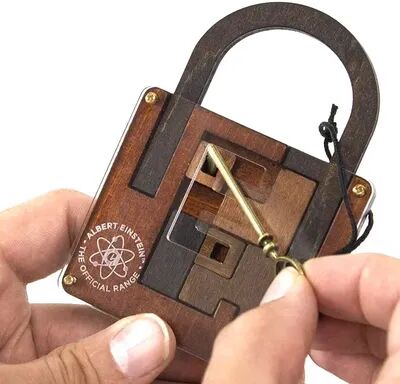
Multisell Products Hub Perfect IQ Lock Challenge Puzzle, Classic Wooden Brainteaser, Cognitive Development Toy For Children Perfect IQ Lock Challenge Puzzle, Classic Wooden Brainteaser, Cognitive Development Toy For ChildrenEngage Your Child's Mind with a Challenging Puzzle Unleash your child's potential with this challenging classic wooden brainteaser puzzle game. Designed to enhance cognitive development, this IQ lock challenge helps improve critical thinking and...49,97 $*Shipping: 0,00 $Secure redirect to the provider
-
Useful Little Things Color Rope Puzzle Board Game Logic Thinking Challenge For Kids blackUntangle, Match, and Solve the Challenge Encourage critical thinking and problem solving skills with this Color Rope Puzzle Board Game. Designed to challenge young minds, this interactive game requires players to untangle, connect, and arrange...29,97 $*Shipping: 0,00 $Secure redirect to the provider
-
Inspire Picks Childrens Puzzle Rope Challenge Board Game Interactive Logic Thinking Game For Kids 1pcTurn playtime into a brainboosting adventure with this engaging kids logic puzzle game designed to challenge and inspire young minds. This interactive rope board game encourages problemsolving, critical thinking, and creativity in a fun, handson...34,93 $*Shipping: 0,00 $Secure redirect to the provider
-
Uplifted Finds Cognitive Challenge Interactive Puzzle Station Cognitive Challenge Interactive Puzzle StationTransform mealtime into a stimulating mental workout with the CognitiveChallenge Puzzle Station, a highutility enrichment module engineered with progressivedifficulty logic. This professionalgrade feeder features a multichambered architecture that...119,97 $*Shipping: 0,00 $Secure redirect to the provider
-
How do you calculate the braking distance, the braking process, and the braking deceleration?
The braking distance can be calculated using the formula: braking distance = (initial velocity^2) / (2 * deceleration), where the deceleration is the rate at which the vehicle slows down. The braking process involves the driver applying the brakes, which causes friction between the brake pads and the wheels, leading to a decrease in the vehicle's speed. The braking deceleration can be calculated by dividing the change in velocity by the time it takes for the vehicle to come to a complete stop. **
-
How do you calculate the braking time and braking distance?
Braking time and braking distance can be calculated using the formula: Braking distance = (initial velocity^2) / (2 * deceleration) Where initial velocity is the speed of the vehicle before braking, and deceleration is the rate at which the vehicle slows down. Braking time can be calculated by dividing the braking distance by the initial velocity. These calculations are based on the assumption of constant deceleration, and may vary depending on factors such as road conditions and the vehicle's braking system. **
-
What are the differences between braking to walking speed and braking?
Braking to walking speed typically involves gradually reducing speed until coming to a complete stop, whereas braking refers to the act of slowing down a moving vehicle. When braking to walking speed, the goal is to smoothly decelerate without any sudden stops, while braking may involve more forceful actions to slow down quickly. Additionally, braking to walking speed is often used in situations where a vehicle needs to stop at a precise location, such as at a crosswalk or intersection. **
-
How do you calculate braking time and braking distance in physics?
In physics, braking time and braking distance can be calculated using the equations of motion and the principles of kinematics. The braking time can be calculated using the equation t = v/u, where t is the braking time, v is the final velocity, and u is the initial velocity. The braking distance can be calculated using the equation d = (v^2 - u^2) / (2a), where d is the braking distance and a is the deceleration. These equations take into account the initial and final velocities, as well as the deceleration of the object to determine the braking time and distance. **
Similar search terms for Braking
-
Profile Books Murdle Puzzle Series 3 Books Collection Set by G. T. Karber - Paperback Murder Mystery Logic Puzzle Books - Bestselling Gift for Puzzle FansSharpen your deductive instincts with the Murdle Puzzle Series 3 Books Collection Set, a collection of three bestselling paperback volumes by G. T. Karber. Each book casts you as the brilliant Deductive Logico, tasking you with solving witty, cleverly illustrated murder mystery logic puzzles. This set is perfect for fans of classic whodunits and brain training, and is a great addition to any puzzle enthusiast's library. The Murdle Puzzle Series has become a global phenomenon, and this three-book set collects the complete original trilogy in one paperback bundle. The first book, Murdle, introduces readers to Deductive Logico and a rogues' gallery of suspects, while the second and third books, Murdle: More Killer Puzzles and Murdle: Even More Killer Puzzles, offer increasingly challenging puzzles to solve. Published by Profile Books, this collection is suitable for adult and teenage puzzle enthusiasts aged 12 and above.29,99 £*Shipping: 2,99 £Secure redirect to the provider
-
Educational Insights Tiltonic Marble Maze Brainteaser - 7+ - Adjustable Track PuzzleChallenge your problem-solving skills with the Educational Insights Tiltonic Marble Maze Brainteaser. This two-stage puzzle combines maze-building with hands-on marble play, creating a fun challenge for children aged 7 and up. Start by studying one of the included challenge puzzles and arranging the adjustable track pieces on the turquoise game board to create the correct route. Once the maze is ready, tilt the board carefully to guide the four colorful marbles through the track and into their matching destinations. Each challenge encourages players to think ahead, test ideas, and refine their solution. With 50 puzzle challenges, 25 adjustable track pieces, and four marbles, Tiltonic offers plenty of replay value. Children can also design their own marble mazes once they have mastered the included puzzles. The tactile format makes it an engaging alternative to screen-based entertainment while encouraging creativity, logic, critical thinking, and hand-eye coordination.13,89 £*Shipping: 3,95 £Secure redirect to the provider
-
Inspired Living Wooden IQ Lock Puzzle High Difficulty Brainteaser For Focus And Problem Solving Wooden IQ Lock Puzzle High Difficulty Brainteaser For Focus And Problem SolvingChallenge your mind with a wooden IQ lock puzzle designed for handson problemsolving and screenfree play. Its very high difficulty rewards patience and strategic thinking as you work toward fitting the pieces correctly. The wooden construction...23,97 $*Shipping: 0,00 $Secure redirect to the provider
-
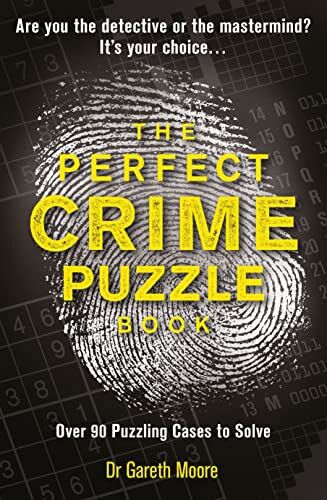
Michael O'Mara The Perfect Crime Puzzle Book by Dr Gareth Moore Over 90 Detective, Logic & Mystery Puzzles to Solve Brain Teasers & Crime Puzzle BookPut your detective skills to the ultimate test with The Perfect Crime Puzzle Book by internationally bestselling puzzle author Dr Gareth Moore. Featuring over 90 mind-bending cases, this interactive puzzle book challenges readers to investigate crime scenes, analyse clues, question suspects, decipher secret codes, and solve intriguing mysteries using logic and deduction. Along the way you'll tackle a wide variety of puzzles, including cryptograms, ciphers, riddles, logic challenges, spot-the-difference puzzles, sudoku, and more. Designed for fans of detective fiction, escape rooms, and brain-training games, this book offers hours of immersive entertainment while sharpening observation, reasoning, and problem-solving skills. Why Readers Love This Book: Features 90+ detective cases and mystery puzzles Packed with logic puzzles, riddles, codebreaking, and brain teasers Written by bestselling puzzle expert Dr Gareth Moore Develops critical thinking, deduction, and observation skills Perfect for puzzle lovers, mystery fans, and escape room enthusiasts Great gift for adults, teens, and anyone who enjoys solving crimes Whether you're an aspiring detective or simply love a good brain challenge, The Perfect Crime Puzzle Book delivers hours of engaging mystery-solving fun.4,25 £*Shipping: 1,99 £Secure redirect to the provider
-
Is braking a reflex?
Braking can be considered a reflex in certain situations. When a driver reacts to a sudden obstacle or hazard on the road by immediately pressing the brake pedal, it can be seen as a reflexive action. This is because the response is automatic and occurs without conscious thought. However, braking can also be a learned behavior, as drivers are trained to use their brakes in specific situations through practice and experience. Therefore, while braking can be a reflex in some cases, it can also be a learned and intentional action. **
-
What is the formula for braking acceleration and braking time in physics?
The formula for braking acceleration is given by \( a = \frac{v_f - v_i}{t} \), where \( a \) is the braking acceleration, \( v_f \) is the final velocity, \( v_i \) is the initial velocity, and \( t \) is the time taken to come to a stop. The formula for braking time can be calculated using the equation \( t = \frac{v_f - v_i}{a} \), where \( t \) is the braking time. These formulas are used to calculate the rate at which an object slows down when braking. **
-
What is the difference between a full braking and an emergency braking?
Full braking refers to applying the brakes with maximum force in a controlled manner to slow down or stop the vehicle. This can be done in response to normal traffic conditions or when approaching a stop sign or traffic light. On the other hand, emergency braking is a sudden and forceful application of the brakes in response to an unexpected hazard or danger, such as a pedestrian stepping into the road or a vehicle suddenly stopping in front. Emergency braking is typically done to avoid a collision and requires quick reflexes and a strong, immediate response from the driver. **
-
What is the difference between braking with a clutch and braking without?
Braking with a clutch involves pressing the clutch pedal while simultaneously applying the brakes, which disengages the engine from the transmission and allows the vehicle to coast to a stop. This method is often used in manual transmission vehicles to prevent stalling. On the other hand, braking without using the clutch means simply applying the brakes without disengaging the engine from the transmission, which can cause the vehicle to stall if the engine speed drops too low. In summary, the main difference is that braking with a clutch allows the vehicle to coast to a stop without stalling, while braking without the clutch can potentially lead to stalling if not done properly. **
* All prices are inclusive of VAT and, if applicable, plus shipping costs. The offer information is based on the details provided by the respective shop and is updated through automated processes. Real-time updates do not occur, so deviations can occur in individual cases. ** Note: Parts of this content were created by AI.